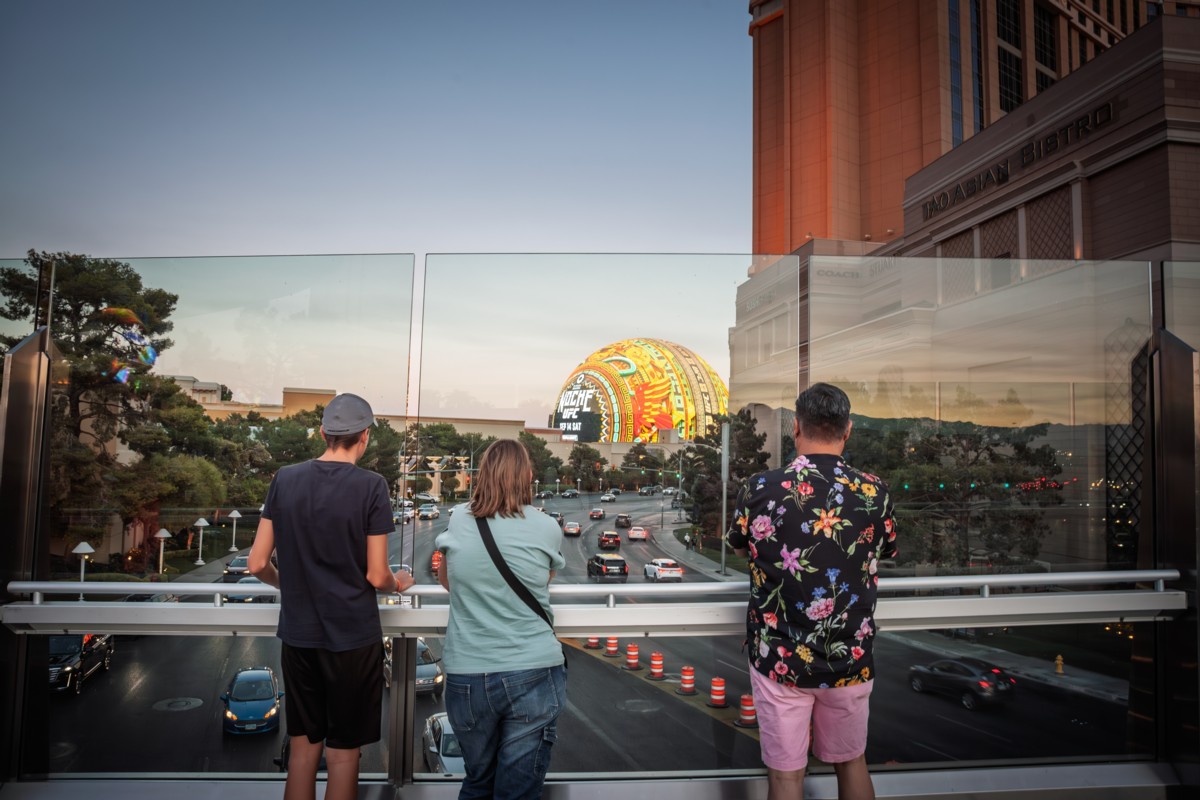
Juiz mantém proibição de parar nas pontes para pedestres da Strip de Las Vegas
Story summary
Um juiz federal manteve a polêmica proibição do condado de Clark de parar ou permanecer em pontes de pedestres ao longo ou ao redor da Las Vegas Strip, rejeitando uma contestação da União Americana pelas Liberdades Civis (ACLU) que argumentava que a regra viola as proteções constitucionais. A juíza distrital dos EUA, Jennifer Dorsey, é
📌 Key Highlights & Takeaways
- Um juiz federal manteve a polêmica proibição do condado de Clark de parar ou permanecer em pontes de pedestres ao longo ou ao redor da Las Vegas Strip, rejeitando uma contestação da União Americana pelas Liberdades Civis (ACLU) que argumentava que a regra viola as proteções constitucionais.
- A juíza distrital dos EUA, Jennifer Dorsey, é
A federal judge has upheld Clark County’s controversial ban on stopping or standing on pedestrian bridges along or around the Las Vegas Strip, rejecting an American Civil Liberties Union (ACLU) challenge that argued the rule violates constitutional protections.
U.S. District Judge Jennifer Dorsey issued the ruling on Sept. 25, concluding that the ordinance does not interfere with protected speech or prevent people from exercising their civil rights. The decision was first reported by the Nevada Independent this week.
The ordinance— passed by the Clark County Commission in January 2024 —made it a misdemeanor to “stop, stand, or do something to cause someone to stop or stand” on any of the elevated pedestrian bridges crossing over or near Las Vegas Boulevard. Violations carry penalties of up to six months in jail and/or $1,000 in fines.
“The bridges were not designed for pedestrians to stop, stand or congregate,” Clark County Counsel Lisa Logsdon explained at the time. “The pedestrian flow zone is similar to pedestrian zones located in other large cities, such as New York City.”
The law quickly earned the nickname “Strip Selfie Ban,” reflecting widespread confusion over whether tourists could stop to take photos.
Both the county, which has full jurisdiction over the Strip, and the Las Vegas Metropolitan Police Department have stated that selfie-takers would not be targeted. However, they are not excluded by the ordinance’s language.
In her ruling, Dorsey acknowledged that the ordinance is restrictive but said it remains within constitutional bounds. She pointed to the unpredictable nature of foot traffic on the Strip, where concerts, sporting events, and conventions can rapidly swell crowds.
“It is difficult to predict when large crowds may be on the pedestrian bridges,” she wrote, adding that the county has a legitimate interest in preventing bottlenecks in areas designed to move thousands of people safely.
Editorial Text & Content Analyzer
Analyze real-time word count, reading speed, and text density metrics on the fly.
Source: Casino.org.
Read the full story at the original source ↗
For questions: mrsmithcons@gmail.com.
More from WinBar VIP