VEGAS MYTHS BUSTED: The Scout Who Named Las Vegas
Story summary
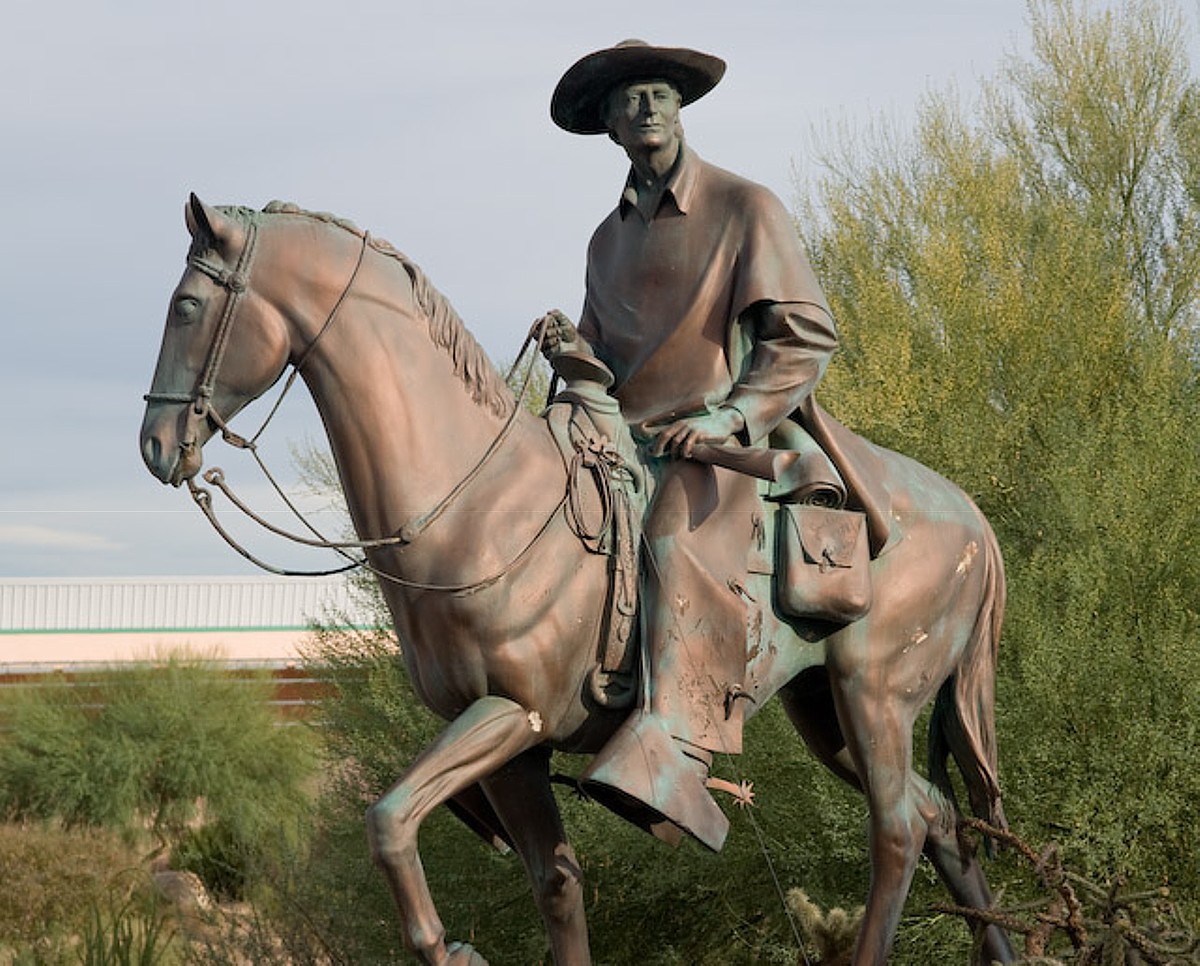
Rafael Rivera is credited with bestowing Las Vegas with its name. In return, Las Vegas named Rafael Rivera Park in his honor. The 10-acre park features the Rafael Rivera Community Center, in front of which stands an 11-foot fiberglass statue of Rivera on horseback, sculpted by Jim Casey in 1978 and
📌 Key Highlights & Takeaways
- Rafael Rivera is credited with bestowing Las Vegas with its name.
- In return, Las Vegas named Rafael Rivera Park in his honor.
- The 10-acre park features the Rafael Rivera Community Center, in front of which stands an 11-foot fiberglass statue of Rivera on horseback, sculpted by Jim Casey in 1978 and
Rafael Rivera is credited with bestowing Las Vegas with its name. In return, Las Vegas named Rafael Rivera Park in his honor. The 10-acre park features the Rafael Rivera Community Center, in front of which stands an 11-foot fiberglass statue of Rivera on horseback, sculpted by Jim Casey in 1978 and originally erected at the Old Vegas amusement park in Henderson, Nev. Except that there is zero evidence that Rivera named Las Vegas.
From late 1829 through early 1830, Rivera was a member of the first trading caravan from Santa Fe, New Mexico, to Los Angeles’ Mission San Gabriel—both of which were located in Mexico at the time. The party of 60 was assembled and led by merchant Antonio Armijo to trade woolen goods from Santa Fe for horses and mules in California. But they’re better known for blazing a 2,700-mile route that we now call the Old Spanish Trail. Water became scarce as the caravan penetrated deeper into the Mojave Desert. So Rivera and a few other scouts peeled off on a horseback reconnaissance mission to find a source in late December 1829.
This part of the story, taught in Las Vegas schools for decades, is supported by evidence. Where it loses credibility is what happened when Rivera rejoined the caravan after a week or two with news of his discovery: an oasis he named Las Vegas (Spanish for “the meadows”).
The best reconstructions of Armijo’s journey—especially historian Elizabeth von Till Warren’s 1974 master’s thesis at UNLV —suggest that, upon Rivera’s return, the main party, using Rivera’s intel, came up the Las Vegas Wash and hit water in the south valley—Duck Creek is the usual candidate—before cutting southwest toward Jean, Nev.
This suggests that Rivera probably discovered water south of Las Vegas, not in the famous artesian Big Springs (today’s Springs Preserve) suggested by the myth.
On May 3, 1844, explorer John C. Frémont camped at the Big Springs and noted that it was already “a camping ground called las Vegas—a term which the Spaniards use to signify fertile or marshy plains.”
The map drawn by cartographer Charles Preuss for Frémont’s 1845 report labeled the spot “Vegas”—the first known published map to carry the name.
We don’t know who gave it that name, but we know there is no evidence that it was Rivera.
Editorial Text & Content Analyzer
Analyze real-time word count, reading speed, and text density metrics on the fly.
Source: Casino.org.
Read the full story at the original source ↗
For questions: mrsmithcons@gmail.com.
More from WinBar VIP