Trump’s Macau Ambitions Collided With a ‘Kabob Stand,’ New Letters Reveal
Story summary
Donald Trump’s ambitions to establish his brand in Macau in the 2000s were hampered by a fast-food business that shared his name, which his lawyer disparagingly described as a “kabob stand.” The dispute became so heated that the future US president appealed directly to Macau’s leader, accusing the t
📌 Key Highlights & Takeaways
- Donald Trump’s ambitions to establish his brand in Macau in the 2000s were hampered by a fast-food business that shared his name, which his lawyer disparagingly described as a “kabob stand.” The dispute became so heated that the future US president appealed directly to Macau’s leader, accusing the t
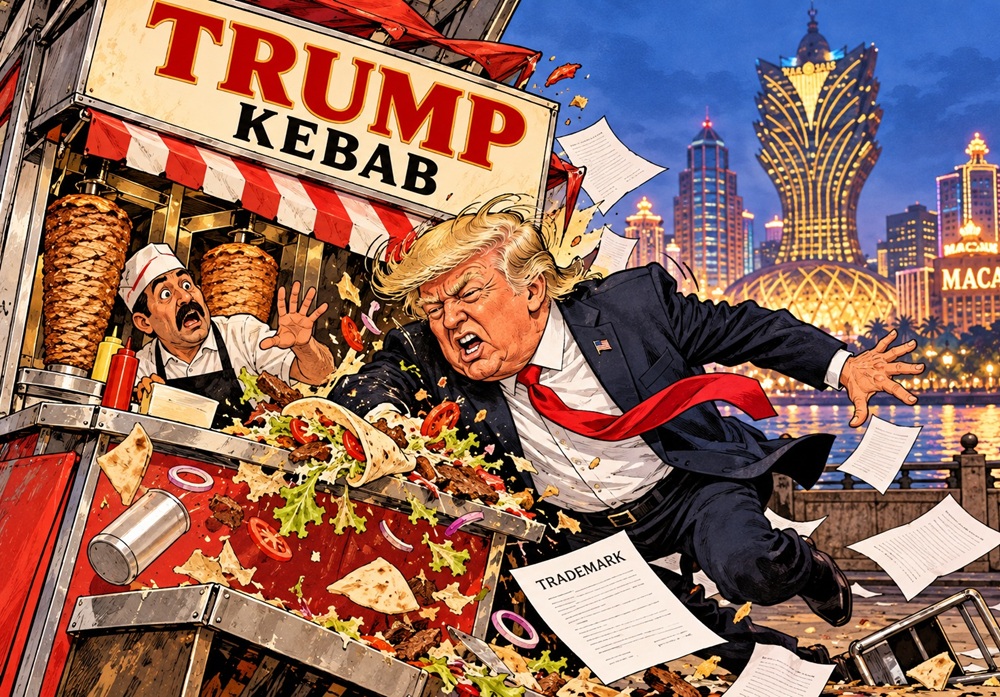
Donald Trump’s ambitions to establish his brand in Macau in the 2000s were hampered by a fast-food business that shared his name, which his lawyer disparagingly described as a “kabob stand.”
The dispute became so heated that the future US president appealed directly to Macau’s leader, accusing the territory’s courts of corruption and enclosing American television ratings to demonstrate how famous he was.
The extraordinary correspondence, obtained through a Freedom of Information Act request and published Tuesday (October 6) by the Hong Kong Free Press , sheds new light on Trump’s unsuccessful efforts to establish himself in the world’s biggest casino market.
Trump tried to enter the gaming sector in Macau in 2001 when he was part of a consortium that bid unsuccessfully for a casino concession, as the former Portuguese enclave was preparing to open its gambling market to international operators.
Despite this setback, he continued pursuing opportunities in the territory. By 2006, Macau had overtaken Las Vegas as the world’s biggest gambling market and Trump began applying for a range of trademarks, including for casino services.
But he was unable to get exclusive rights for the Trump name, because two Macau residents, Maria Cecilia Bastos Xavier and Wong Un Chon, had already incorporated Trump Companhia Limitada—Portuguese for Trump Company Limited—for their fast-food business.
Trump sued, demanding exclusive rights to his brand and 5 million Macau patacas (approximately $625,000) in compensation.
But in March 2010, a Macau court rejected his claim, finding that Trump and his company were not sufficiently well known among the territory’s general public.
Editorial Text & Content Analyzer
Analyze real-time word count, reading speed, and text density metrics on the fly.
Source: Casino.org.
Read the full story at the original source ↗
For questions: mrsmithcons@gmail.com.
More from WinBar VIP